

The Liver in Spring: A Traditional Chinese Medicine Perspective
In Traditional Chinese Medicine (TCM), the seasons are not only environmental changes — they are energetic movements that influence the body. Spring is associated with the Wood element and the Liver system, making it an important time to understand how this organ network functions within TCM theory.
This perspective differs from Western medicine. When TCM refers to the “Liver,” it describes a functional system that includes physiological, emotional, and energetic aspects — not only the anatomical organ.
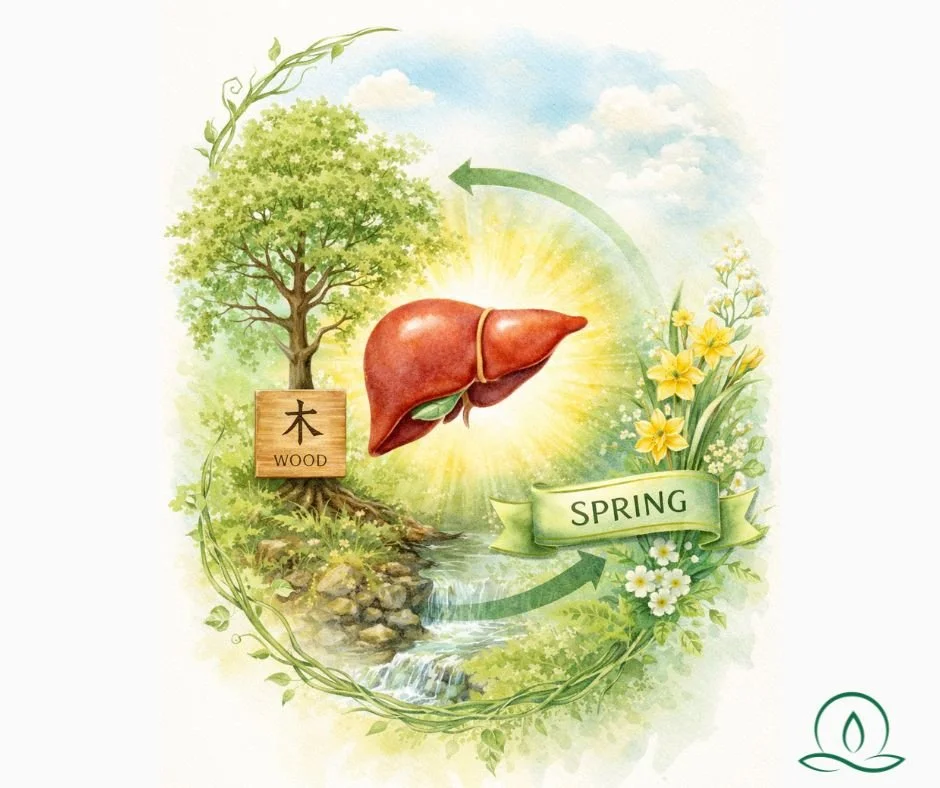
The Liver’s Functions in TCM
According to classical TCM theory, the Liver has several key roles:
1. Ensuring the Smooth Flow of Qi
The Liver is responsible for regulating the movement of Qi (vital energy) throughout the body. This function affects physical movement, digestion, emotional balance, and even the menstrual cycle.
When Liver Qi flows smoothly, a person may experience:
Physical flexibility
Emotional steadiness
Clear thinking
Balanced digestion
When the flow becomes constrained — often described as “Liver Qi stagnation” — people may notice:
Neck and shoulder tension
Rib-side discomfort
Head tension
Digestive irregularity
Irritability or frustration
In TCM, many stress-related patterns are understood through this concept of constrained Qi movement.
2. Storing the Blood
The Liver is said to store Blood and regulate its distribution, particularly during rest and activity. This function links the Liver system to:
Menstrual health
Tendon nourishment
Eye health
Sleep quality
When Blood is insufficient in TCM theory, symptoms such as dry eyes, muscle cramps, or light sleep may be observed.
3. Governing the Tendons and Sinews
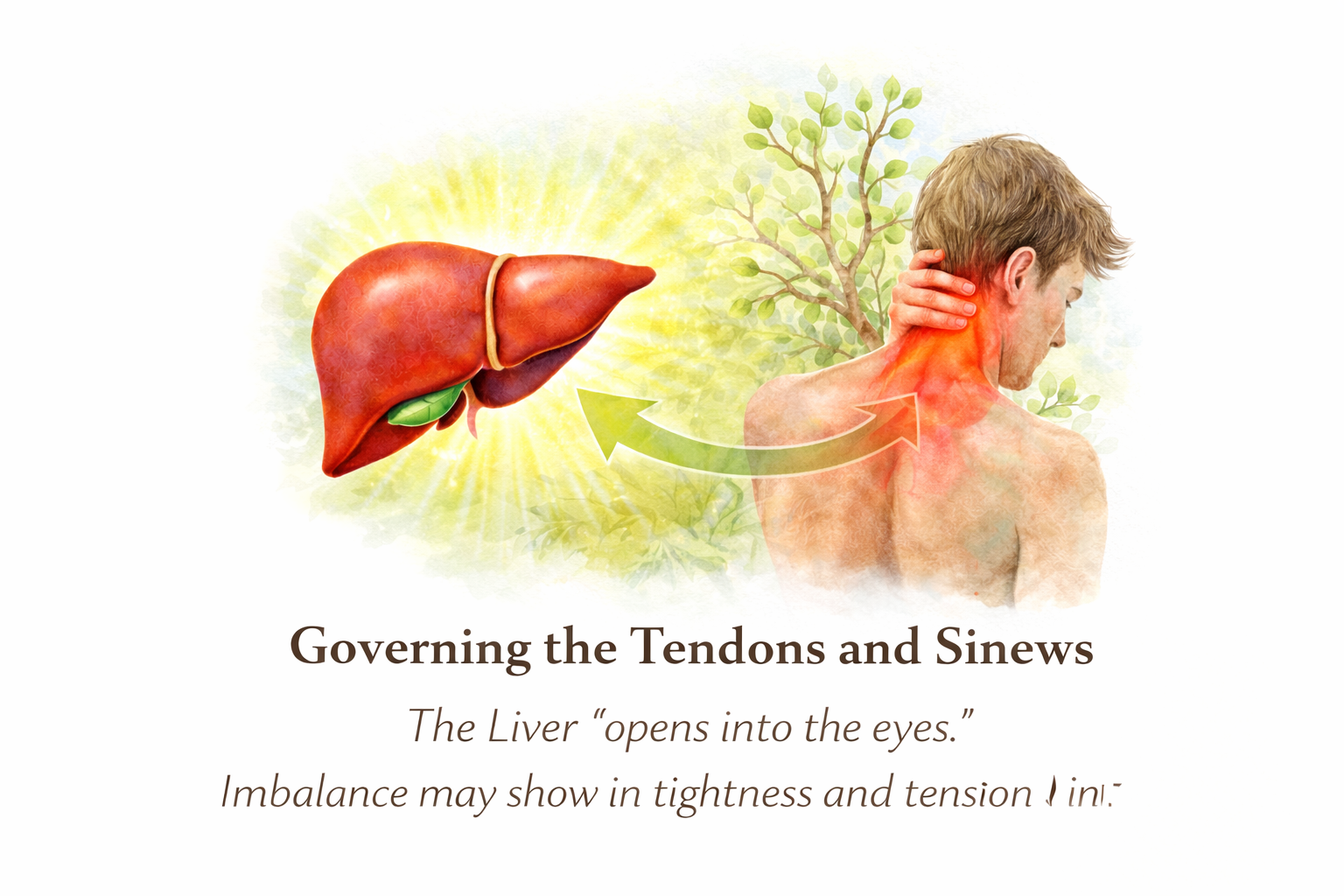
The Liver nourishes the sinews (tendons and connective tissues). For this reason, muscular tightness, stiffness, and reduced flexibility are often considered related to Liver imbalance within TCM.
Spring is a season of outward expansion. If the Liver’s regulatory function is strained, that rising energy may manifest as muscular tension — particularly in the neck, shoulders, and jaw.
4. Opening into the Eyes
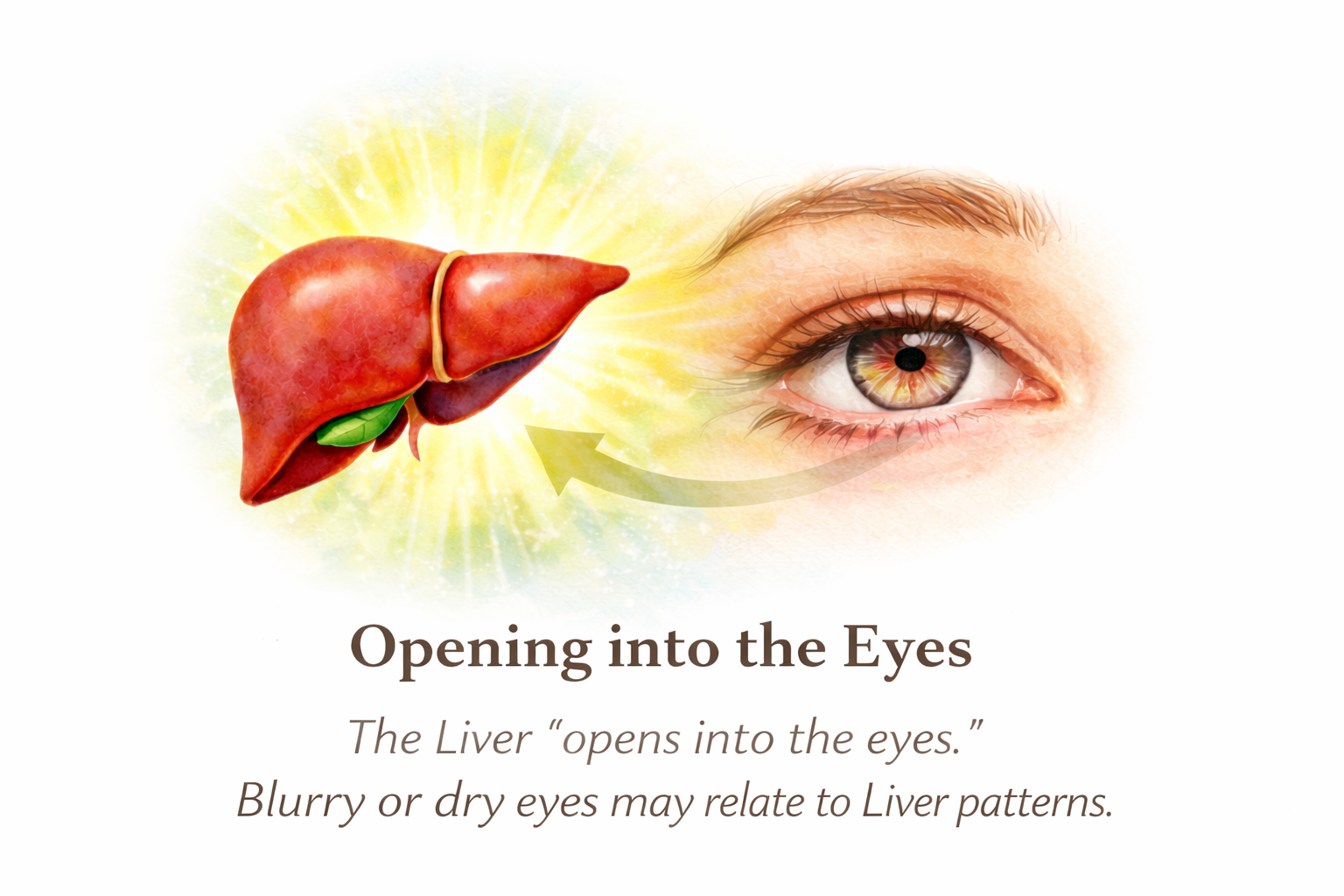
In TCM, the Liver “opens into the eyes.” Blurred vision, dry eyes, or visual strain are sometimes interpreted within this system as Liver-related patterns.
The Emotional Aspect of the Liver
Each organ system in TCM is associated with emotional qualities. The Liver is linked with:
Vision and planning
Assertiveness
Decision-making
Frustration when imbalanced
When Liver Qi flows harmoniously, individuals may feel purposeful and decisive. When constrained, frustration may arise more easily.
TCM does not view emotions as separate from the body. Instead, emotional and physical states are understood as interconnected.
Why Spring Matters
Spring energy is described as rising, expanding, and outward-moving — similar to new plant growth. This mirrors the function of the Liver, which also promotes movement and expansion.
Seasonal transitions can place temporary strain on this system. During Spring, it is common for people to report:
Increased tension
Emotional sensitivity
Headaches
Digestive fluctuations
Restlessness
From a TCM perspective, this reflects the dynamic movement of Wood energy.
Acupuncture and Liver Qi
ReAcupuncture is traditionally used to regulate Qi flow and restore balance within organ systems, including the Liver.
Points commonly selected in Spring include:
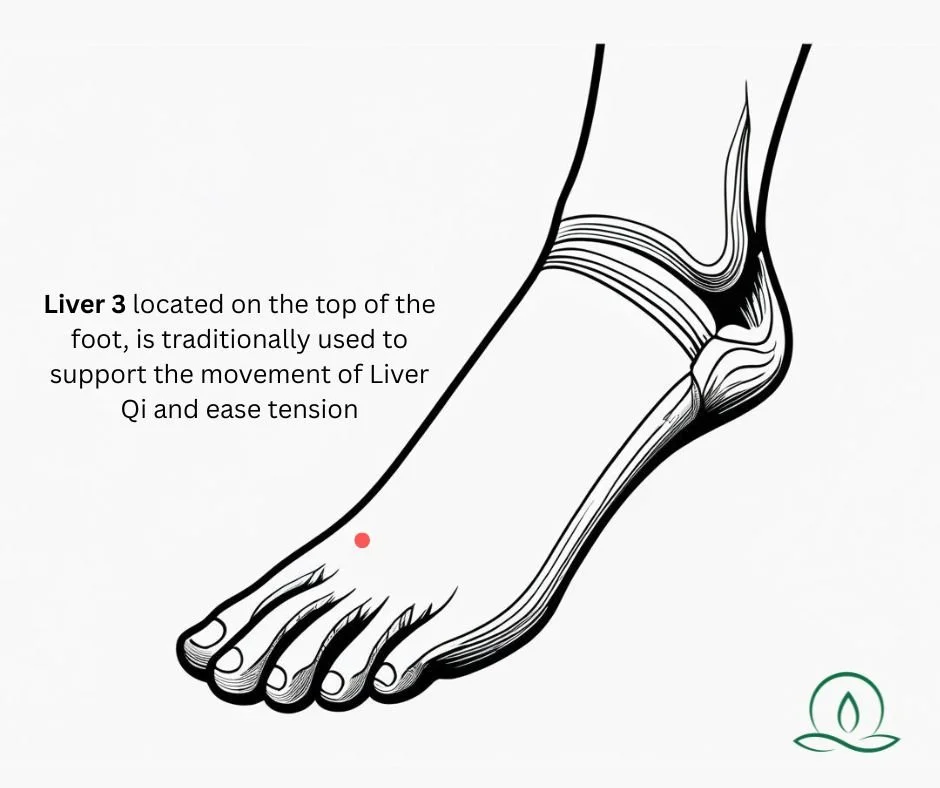
Liver 3 (Taichong) — traditionally used to regulate Liver Qi and ease tension.
Large Intestine 4 (Hegu) — often selected to support circulation and relieve head and neck tension.
Gallbladder 34 (Yanglingquan) — known as the influential point of the tendons and frequently used to benefit muscular flexibility and support the smooth flow of Liver Qi, particularly when there is stagnation.
Treatment is always individualised based on pattern differentiation within TCM theory.
Supporting Liver Balance in Spring
In addition to acupuncture, TCM traditionally encourages:
Gentle stretching and movement
Time outdoors in natural light
Fresh, seasonal foods
Emotional expression rather than suppression
Gradual planning and goal setting
Spring represents growth — but growth does not need to be forced. Within TCM, balance is achieved not by pushing the body, but by supporting its natural rhythms.
Understanding the Liver’s role during this season allows us to respond with awareness rather than resistance.
References: Modern research has investigated acupuncture for certain types of chronic pain. A large individual patient data meta-analysis published in Archives of Internal Medicine found acupuncture to be more effective than no treatment and sham acupuncture for certain chronic pain conditions:
https://pubmed.ncbi.nlm.nih.gov/22965186/
The UK’s National Institute for Health and Care Excellence (NICE) recommends acupuncture as a treatment option for chronic primary pain in some cases:
https://www.nice.org.uk/guidance/ng193
Research is ongoing, and individual responses vary.
